Operational Reporting vs. Analytical Reporting: Understanding the Differences
Operational Vs Analytical Reporting
Understanding the key differences between these two types of reporting is crucial for leveraging them effectively: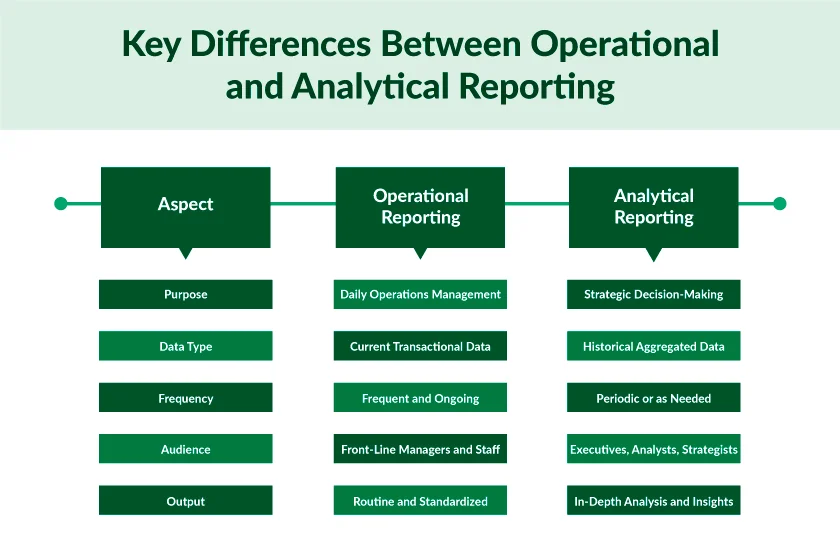
When to Use Operational Reporting vs. Analytical Reporting
Use Operational Reporting When You Need To:
- Monitor key performance indicators (KPIs) in real-time.
- Ensure that business processes are functioning efficiently.
- Identify and resolve issues as they arise.
- Maintain control over day-to-day operations.
Use Analytical Reporting When You Need To:
- Understand the reasons behind performance trends.
- Identify opportunities for improvement or growth.
- Develop long-term strategies based on data-driven insights.
- Make informed predictions about future outcomes.
How GL Connect Enhances Reporting Capabilities
GL Connect is a powerful tool that bridges the gap between operational and analytical reporting, empowering businesses to unlock detailed financial clarity and create reports independently.Key Benefits of GL Connect:
- Enhances both operational and analytical reporting through seamless integration with financial systems.
- Allows users to generate reports without relying on IT departments.
- Provides real-time access to accurate and up-to-date financial data.
- Enables customization of reports to meet specific business needs.
How GL Connect Enhances Reporting Capabilities
GL Connect is a powerful tool that bridges the gap between operational and analytical reporting, empowering businesses to unlock detailed financial clarity and create reports independently. Here’s how GL Connect enhances both types of reporting: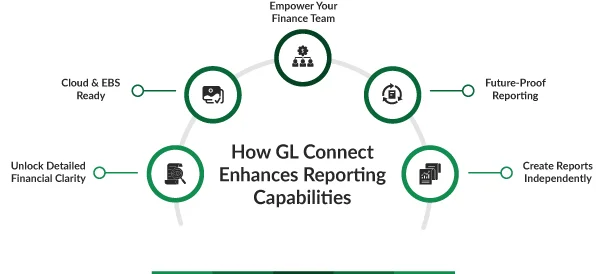
Empower Your Finance Team
GL Connect empowers finance teams to generate both operational and analytical reports without relying on IT. Its user-friendly interface and robust capabilities ensure that your finance team can focus on what matters most: making informed decisions.
Cloud & EBS Ready
With the ability to leverage Cloud and EBS data, GL Connect provides seamless integration with existing systems. This ensures that your operational reports are accurate and up-to-date, while analytical reports are comprehensive and insightful.
Future-Proof Reporting
GL Connect’s future-proof capabilities mean that your business will always have access to the financial data it needs. Whether it’s adapting to changes in your chart of account structures or increased transaction counts, GL Connect ensures that your reporting strategy grows with your business.
Unlock Detailed Financial Clarity
For CFOs and financial analysts, GL Connect offers in-depth drill-down capabilities that allow for a detailed examination of financial data. This ensures that both operational and analytical reports provide the financial clarity needed to drive strategic initiatives.
Create Reports Independently
With GL Connect, financial users can create reports independently, reducing reliance on IT and accelerating the reporting process. This capability is crucial for both operational and analytical reporting, as it allows for rapid response to changing business needs.
Conclusion
Both operational and analytical reporting play crucial roles in the success of a business. While operational reporting provides the real-time insights needed for day-to-day management, analytical reporting offers the strategic insights necessary for long-term planning.
By leveraging a tool like GL Connect, businesses can enhance their reporting capabilities, empowering teams to make better, data-driven decisions.