Introduction
The Corporate Sustainability Reporting Directive (CSRD) has transformed the European Union (EU) corporate reporting landscape. While corporate reporting is not new in the EU, the CSRD guidelines have expanded scope and include workforce data in the reporting requirements. This has added a new dimension to the HR function. CSRD compliance involves reporting on 47 critical people metrics ranging from pay equity and employee engagement to turnover rates and health & safety.
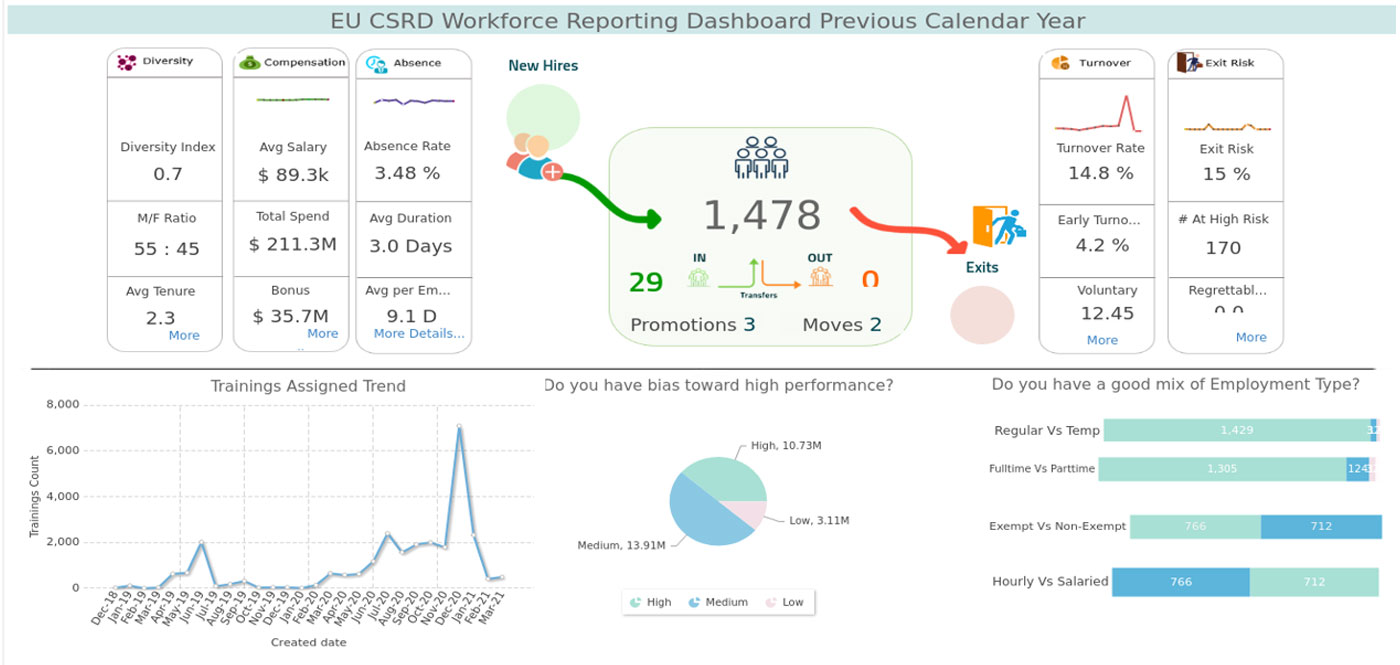
CSRD reporting standards come into effect as early as 2024 — depending on the organization’s size — leaving HR teams with little time to build robust reporting architectures for the required metrics. Many businesses are leaning on people analytics tools to take on this challenge. These tools’ easy setup and customizable reporting are essential to unify workforce data, meet CSRD compliance requirements, and make data-driven business decisions.
If you’re figuring out how to chart your path to compliance, here’s a handy guide to help you with your CSRD journey.
Given the complexity involved in collecting and reporting the people metrics outlined in the European Sustainability Reporting Standards (ESRS) under the CSRD, most companies will benefit from dedicated people analytics tools designed to plug into multiple data sources, consolidate information, and provide actionable insights. The high degree of flexibility and customization these tools offer makes it easy for HR teams to access and report data without building new systems from scratch. People analytics can not only streamline CSRD compliance but also empower HR professionals to create a sustainable and equitable workplace.