The last three years have transformed how the workforce and workplaces operate. Covid, even as it recedes, made remote and hybrid working the new normal, with virtual meetings taking precedence over in-person collaborations. Watercooler chats changed to Friday evening virtual meetups. Working from anywhere, anytime, started to look like a real possibility. One would think things were going great, and workplace satisfaction would only go up.
Fast forward a couple of years, and organizations found themselves in an ongoing war for talent. And then came layoffs. Employee experience, boosting employee morale, people- and skill-centric cultures and effective skill development and L&D are no longer buzzwords but critical to improving organizational productivity and employee experience. Developing a people analytics strategy has become crucial to attracting and retaining the best talent in a tight market.
Today, around 70% of top company executives position people analytics as a top priority. However, only 13% of businesses feel confident about their people analytics capabilities. Without a robust people analytics strategy, this is bound to happen.
Enterprises today have vast amounts of data at their disposal. And this data also involves employee information, from their onboarding and performance to their resignation. But what good is that data if it lies barren across organizational silos?
To bridge the gap, forward-looking businesses are fast-adopting data analytics and business intelligence platforms to glean, analyse and extract rich data insights. But, what’s surprising is that only 36% of businesses believe that this data produces actionable insights.
So, what can organizations do about it? The answer lies in developing a holistic people analytics strategy.
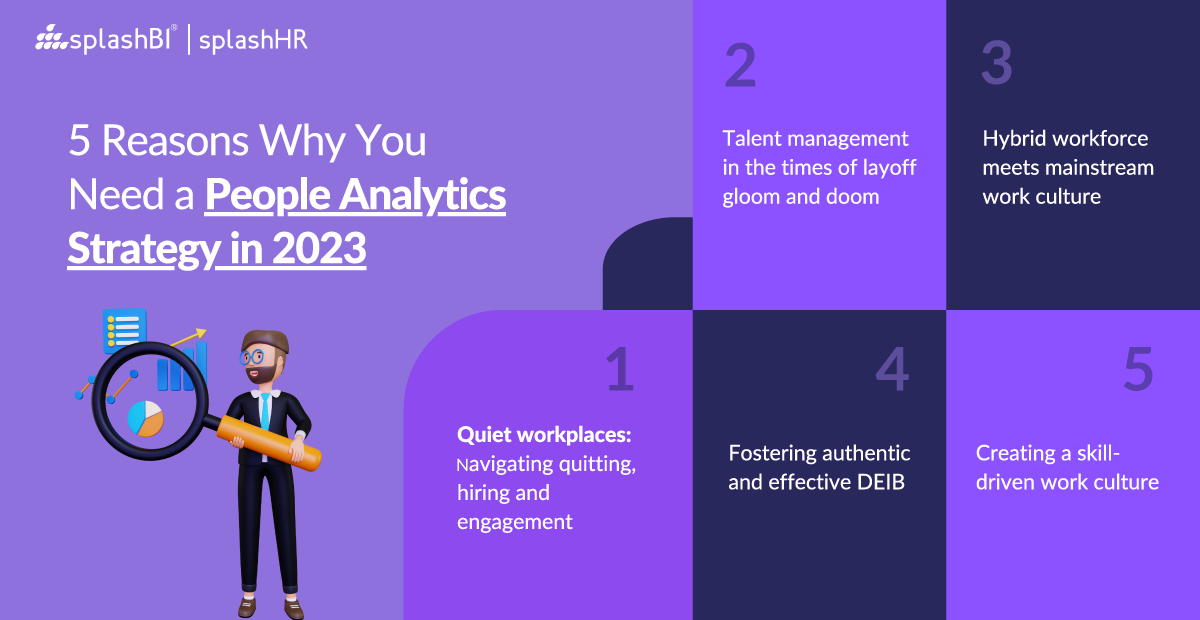
In this blog, we list out the top 5 reasons why your HR needs a people analytics strategy in 2023.