

Every HR leader I talk to says some version of the same thing: we have more workforce data than ever, and it still takes too long to get a straight answer out of it. Headcount, attrition, compensation trends, compliance reporting — the numbers exist somewhere in the HRIS. The problem has never really been a shortage of data. It's the distance between the data and the person who needs to act on it. That's the gap AI, and specifically conversational AI, is beginning to close. But there's a catch. Asking better questions only works when the data underneath is trustworthy. Without consistent definitions, governed access, and reliable reporting logic, conversational AI simply makes it easier to get an answer that may not be right.
From six hours to ten minutes. Without replacing the HR system.
A US utility reduced its monthly workforce compliance reporting time by over 95%, while giving more than 65 managers and executives direct access to workforce data. The breakthrough came from a smarter, governed approach to reporting on the data they already had.
Read on to learn how they did it.
The old HR analytics workflow was never built for speed
For most of the last two decades, "HR analytics" meant a small, overworked group of power users who knew how to write SQL, wrangle static system reports, and stitch spreadsheets together into something leadership could read. Everyone else waited in line. A line manager who wanted to know why turnover spiked in a department had to submit a request and hope it came back before the next town hall.
The scale of the problem is well documented. The scale of the problem is well documented. Deloitte's research suggests HR teams spend as much as 57% of their time on administrative tasks. Separately, a World Economic Forum and Accenture task-based analysis, discussed by the CIPD, found that 45% of the time spent by payroll and timekeeping clerks involves tasks with high potential for automation by large language models.
These findings point to a common opportunity: reducing the time HR spends on routine work so its people can focus on decisions that require their expertise.
That model has three structural weaknesses:
- It's static. Reports reflect a single point in time, not the "between two dates" view that compliance, finance, and workforce planning actually need.
- It's fragmented. Headcount, comp, and mobility data often live in separate reports with their own filters and definitions, so someone has to manually reconcile them before anyone can trust the number.
- It's IT-dependent. Every new question — a new cut of the data, a new KPI — becomes a ticket, not a query the business user can run themselves.
AI doesn't fix this by replacing HR judgment. It fixes it by collapsing the distance between "I have a question" and "I have a trustworthy answer."
What AI actually changes in HR reporting
A few shifts are doing most of the work right now:
1. Natural-language, conversational querying. Instead of a business partner learning SQL or waiting on an analyst, they can ask a plain-language question — "show me headcount by department for grant-funded roles, month over month" — and get back a governed, accurate result pulled from a single source of truth. The AI layer translates intent into query logic; the human still owns the interpretation.
2. A data model flexible enough to keep up. AI is only as good as the data model underneath it. That model has to do two things at once: stay governed enough that HR and finance trust the same numbers, and stay flexible enough to grow. In practice that means a business user can start with a simple workbook, promote a metric into the shared model once it's proven out, or bring in something extra — an Excel file with detail that hasn't made it into the HRIS yet — and blend it into the governed structure on demand. SplashAI can pull an uploaded file like that into the model within a session, so "governed" doesn't have to mean "static."
3. Governed self-service instead of ungoverned spreadsheets. The real risk was never that business users wanted to explore data — it's that they were doing it in disconnected spreadsheets with no security or consistent logic behind them. AI-enabled platforms let people self-serve inside a governed model, so exploration doesn't come at the cost of accuracy or PII protection.
4. Trend detection and forecasting that used to require a dedicated analyst. Seasonal hiring patterns, attrition risk, compensation drift — the kind of analysis that once needed a specialist and a week can now surface automatically, with the option to view it as a chart or a table depending on how the audience thinks.
Here's what ties these capabilities together: conversational AI is only as reliable as the reporting foundation it queries. A unified, governed data model brings information from HRIS, payroll, finance, and time and attendance into a structure with consistent definitions and appropriate access controls. Natural-language querying makes that information easier to explore, but the underlying model determines whether the answers are meaningful and trustworthy.
That's why the foundation in the diagram below matters more than any individual AI feature.
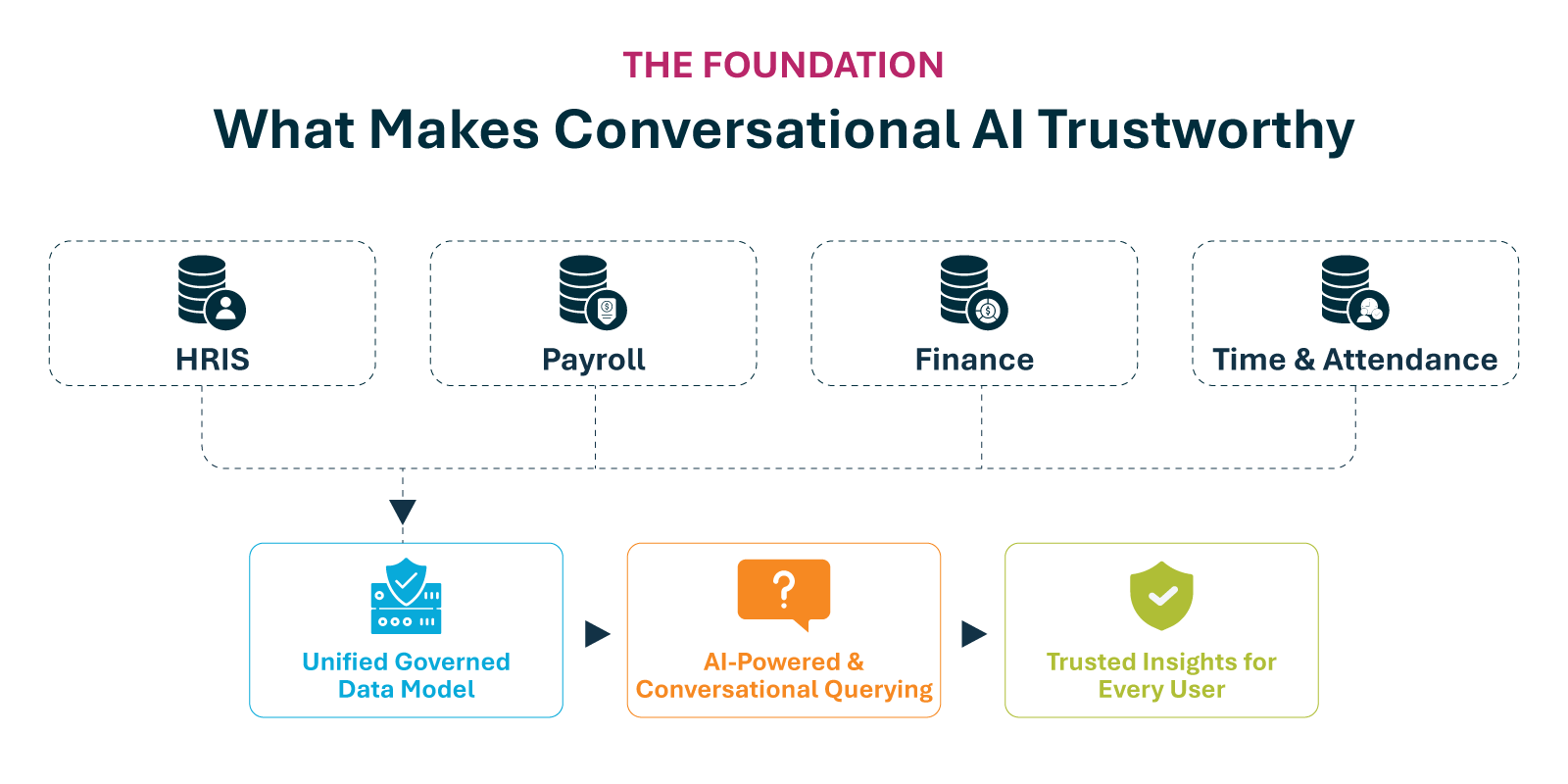
Figure 1: A unified, governed data model is the foundation conversational AI depends on.
None of this replaces the HR analytics function. It changes its job from "producer of reports" to "designer of the model everyone else queries."
And it's happening faster than the "AI hype" label suggests.SHRM's most recent State of AI in HR 2026 research found that 39% of organizations had adopted AI somewhere in HR, up from 26% just a year earlier. The same research reported that 87% of HR professionals using AI saw improvements in efficiency.
Separately, Gartner’s 2025 employee survey found that 62% of employees said AI saved them time, with employees in AI-relevant roles reporting average savings of 1.5 hours a day. The gains show up when AI addresses specific, recurring bottlenecks, not when it’s layered on as a generic add-on.
A real example: turning a six-hour compliance report into a ten-minute one
Remember the utility that cut its monthly workforce reporting process from six hours to ten minutes? Here's what actually changed.
The organization, a municipally owned electric and fiber-optic utility in the Southeastern U.S., was undertaking a federally funded broadband build-out that required compliance-grade monthly headcount reporting by union status, funding source, and service line.
Its HR team had to manually combine several static Oracle Cloud reports into a single spreadsheet and reconcile the numbers against finance. The process took more than six hours every month and still produced only a point-in-time snapshot, rather than the date-range reporting needed for compliance.
The challenge was the time and effort required to turn that data into a reliable, usable report.
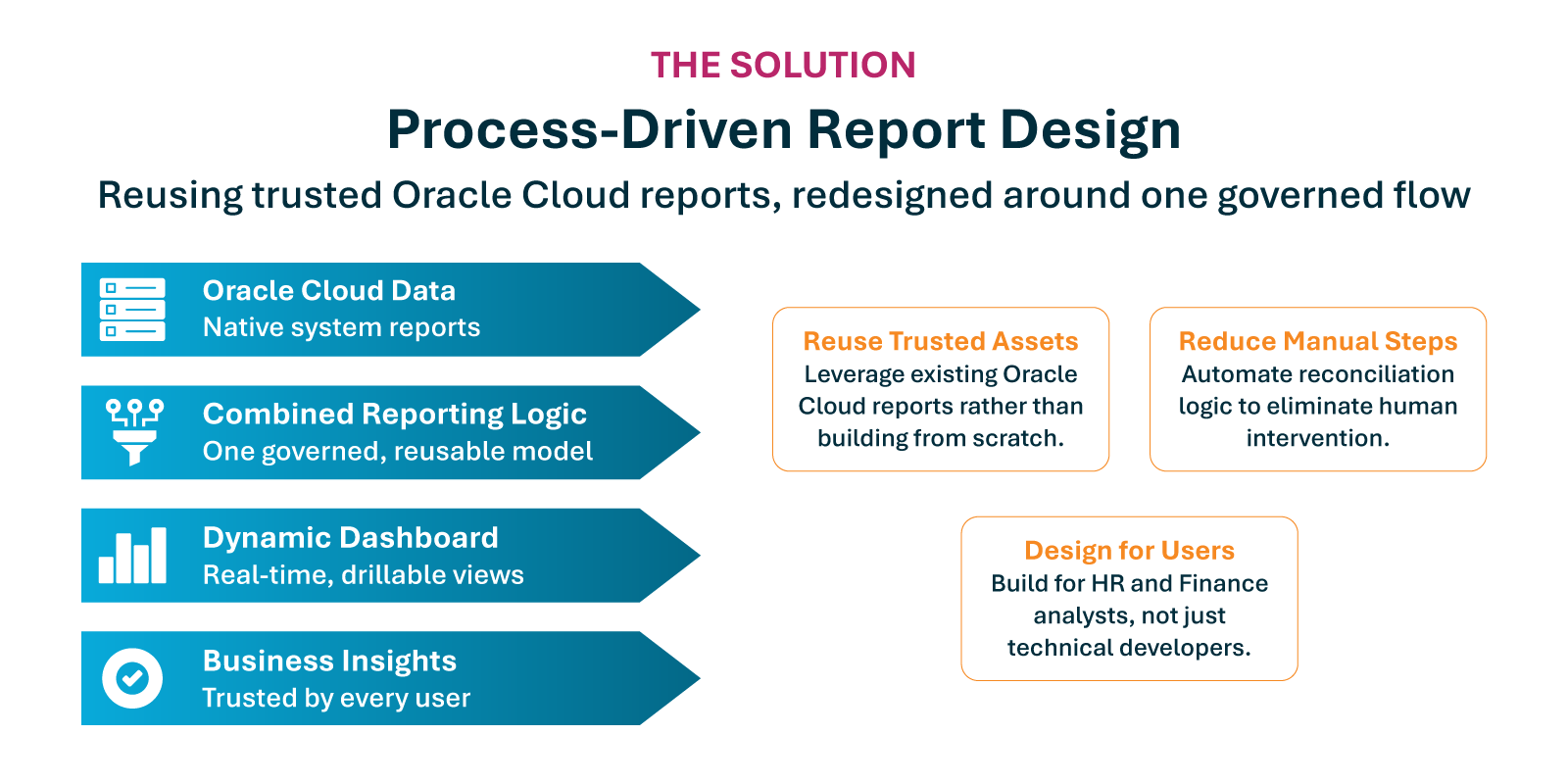
Figure 2: Rather than replace the system, the utility and SplashBI redesigned the reporting process — reusing trusted Oracle Cloud data, turning it into one governed flow, and keeping it usable for non-technical analysts.
By consolidating reports into one governed data model, standardizing the reporting logic, and adding a self-service dashboard layer, the utility company reduced its monthly reporting process from more than six-hours to approximately ten minutes, a reduction of over 95%. More than 65 line managers and executives who previously had no direct access to workforce data now explore it themselves. Because the underlying SQL logic stays visible and consistent, HR and finance work from the same trusted numbers instead of reconciling separate versions every month.
Importantly, these improvements came from modernizing the reporting foundation along with AI. That foundation creates an opportunity to build on conversational, AI-assisted querying. Instead of asking AI to make sense of disconnected reports, the organization can build on a model whose definitions and reporting logic have already been established.
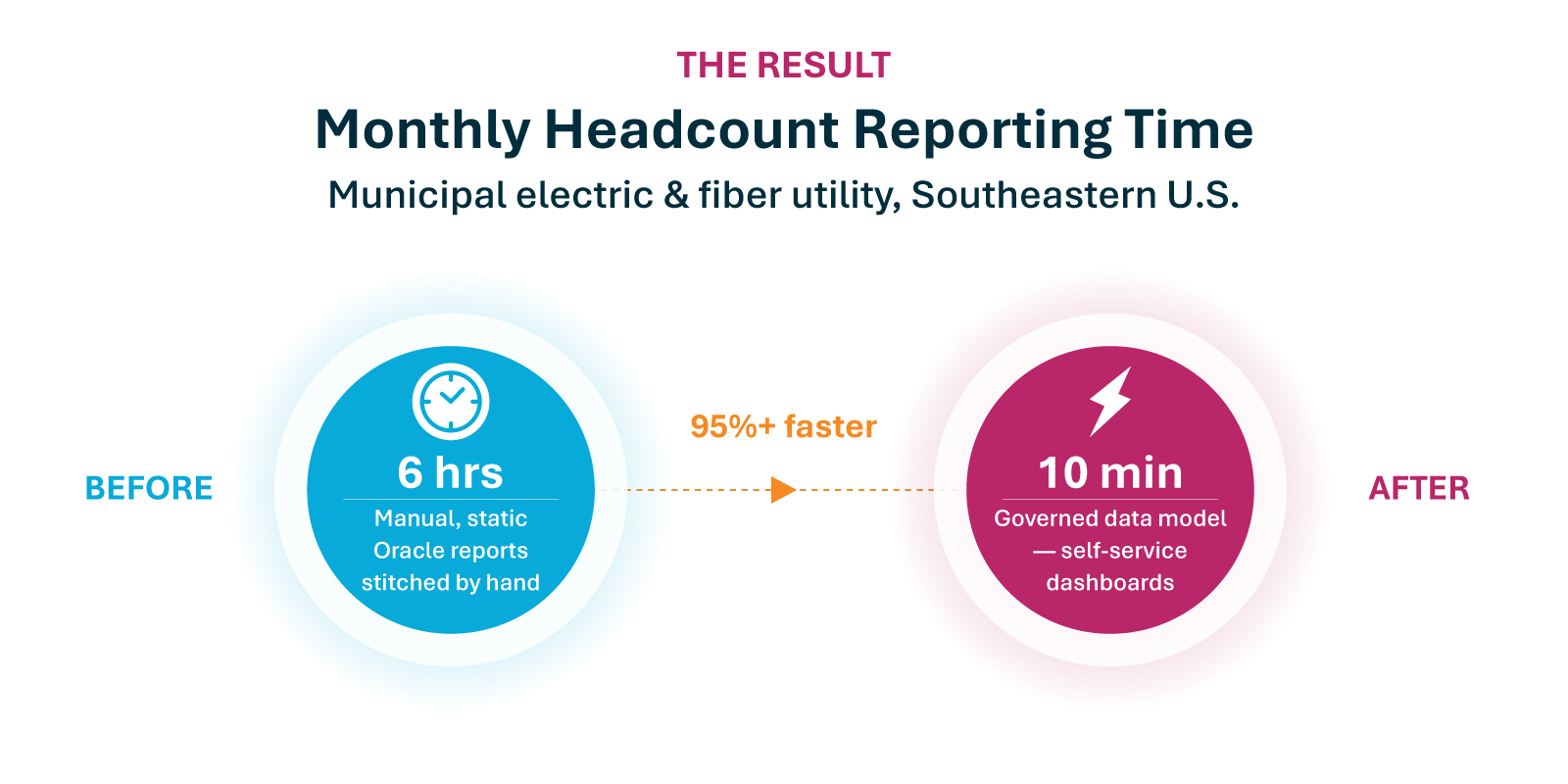
Figure 3: The utility's monthly headcount reporting time before and after moving to one governed data model with self-service dashboards.
The lesson for other HR teams
This story isn't really about a tool. It's about sequencing: the team didn't try to fix everything at once. They picked one painful, recurring, high-stakes report, got the definitions and governance right, proved the time savings, and then expanded the same model to compensation dashboards and other business areas. That phased approach — start with a painful reporting problem, establish trusted data, prove the value, then introduce more intelligent ways to access it — is the part worth copying regardless of which platform sits underneath it. Conversational AI becomes far more useful when the reporting foundation has already earned the organization’s trust.
If you're an HR analytics leader evaluating where AI actually pays off, start the same way: pick the report that eats the most hours and creates the most reconciliation anxiety every month, and ask whether the bottleneck is a data problem or a process problem. Most of the time, it's the second one — and that's exactly the problem AI-powered, conversational access to governed data is built to solve.
The competitive advantage isn't simply asking questions faster. It's knowing that the answers are grounded in data the business can trust.
The organizations that get ahead here won't be the ones with the most dashboards. They'll be the ones where any manager can ask a question in plain language and trust the answer they get back.

With 15+ years across consulting and industry, Manjari specializes in systems analysis, enterprise analytics, and data governance. Her background spans HR and payroll systems and people analytics, grounded in doctoral research in machine learning and analytics. She works with customers and cross-functional teams to gather requirements and design analytics and AI-enabled solutions they can trust.