
Artificial intelligence has become the defining buzzword in HR technology.
But beneath the noise, a more practical question is emerging inside HR departments:
What exactly can AI help us do?
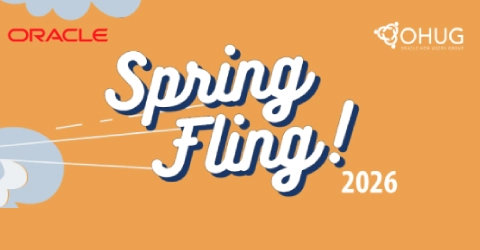
That question sat at the center of SplashBI’s recent session at OHUG Spring Fling, where Tom Ericson and Brianne Minnich walked attendees through not just the theory behind AI-powered HR analytics, but the actual, real-world applications beginning to reshape how HR teams operate.
Watch the full webinar on demandBecause while much of the market still talks about AI in abstract terms, the most valuable conversation is no longer whether HR should adopt AI.
It is where AI creates immediate, measurable value.
Here are seven of the most compelling HR analytics use cases discussed during the session.
Use Case 1. Identifying the Real Drivers of Employee Attrition
Most HR teams can tell you their turnover rate. Far fewer can explain why it is happening.
As Tom Ericson noted during the webinar, knowing that turnover sits at 15 percent is merely a data point. Real value comes from understanding what sits beneath it.
AI-powered analytics allows HR teams to move beyond surface-level metrics by identifying:
- Which departments are driving attrition
- Where turnover is highest geographically
- What patterns precede employee exits
- Which managers or business units may require intervention
Rather than simply reporting attrition, AI enables organizations to begin diagnosing it.
Use Case 2. Forecasting Hiring Demand Before It Becomes Urgent
Hiring often begins reactively.
A team loses talent. A leader panics. Recruiting scrambles.
But AI allows organizations to forecast workforce needs before shortages become emergencies.
As discussed during the session, analyzing historical attrition trends and seasonal workforce patterns can help HR predict future hiring demand before gaps emerge.
This gives recruiting teams time to:
- Proactively build pipelines
- Allocate sourcing budgets
- Identify high-risk staffing gaps
- Align hiring with business growth forecasts
Instead of reacting to vacancies, organizations can plan ahead.
Use Case 3. Connecting Hiring Quality to Long-Term Retention
One of the webinar’s most compelling observations was deceptively simple:
“Turnover is a result of hiring.”
If better hires are made upfront, long-term attrition should decline.
AI can help HR teams validate that theory by connecting recruiting and retention data to answer questions like:
- Which sourcing channels produce the longest-retained employees?
- Which recruiters generate the strongest hires?
- Which interview criteria correlate with long-term success?
- Are certain candidate profiles leaving faster than others?
This transforms talent acquisition from transactional hiring into strategic workforce optimization.
Use Case 4. Detecting Behavioral Patterns Before Employees Leave
Perhaps one of the most practical use cases discussed by Brianne Minnich involved identifying behavioral signals that may precede attrition.
For example:
HR teams can analyze whether employees who leave tend to:
- Use unusually high PTO before resigning
- Show declining performance scores
- Increase absenteeism
- Disengage in manager reviews
Minnich specifically cited how organizations could examine PTO usage among exiting employees to uncover hidden trends.
Patterns like these can help organizations build proactive retention strategies before resignation letters appear.

Use Case 5. Surfacing Internal Talent Before Hiring Externally
One of the more strategic workforce planning examples shared in the session involved skills redeployment.
Instead of immediately hiring externally for needed capabilities, AI can help organizations assess whether those skills already exist internally.
Ericson offered the example of needing French-speaking employees for a project. Rather than opening new requisitions, AI-powered talent intelligence could identify existing employees with those qualifications.
This supports:
- Internal mobility initiatives
- Lower recruiting costs
- Faster staffing fulfillment
- Better workforce utilization
In many organizations, valuable talent is already present. It is simply hidden.
Use Case 6. Empowering Managers with Self-Service Analytics
Another recurring theme from the webinar was reducing dependency on HRIS and analytics teams.
Too often, business leaders wait days or weeks for simple reporting requests because internal analytics teams are overloaded.
AI changes that.
Managers can directly ask questions such as:
- What is the turnover in my department?
- How has absenteeism changed this quarter?
- What is my average team tenure?
- How does my compensation compare across peer teams?
Rather than submitting tickets and waiting, leaders gain immediate access to governed insights.
As Minnich explained, this reduces pressure on HRIS teams while accelerating decision-making.
Use Case 7. Giving Employees Instant Access to Routine HR Answers
Not every AI use case needs to be deeply strategic.
Sometimes the most valuable wins come from eliminating small daily inefficiencies.
Minnich highlighted how employees can use conversational AI for simple self-service questions like:
- How much PTO do I have left?
- What benefits am I enrolled in?
- What is our holiday schedule?
- Where can I find policy documentation?
While these may seem minor, collectively they:
- Reduce HR administrative burden
- Improve employee experience
- Increase operational efficiency
- Free HR teams for more strategic work
Sometimes transformation starts with small friction points.
AI’s Role in HR Is Becoming Clearer
If OHUG Spring Fling proved anything, it is that AI in HR is moving beyond theory.
The most mature organizations are no longer asking whether AI belongs in HR. They are asking where it can create the greatest impact first.
And increasingly, the answer is not in replacing HR professionals.
It is in helping them:
- Move faster
- Think deeper
- Identify patterns sooner
- Act more strategically
As Brianne Minnich summarized during the session: AI helps organizations move from taking “even a day” to analyze dashboards to having an action plan in “20 minutes.”
That is a fundamentally different way of working.
Watch the Full OHUG Spring Fling Webinar on Demand
Want to hear the full conversation and see these examples discussed live by Tom Ericson and Brianne Minnich?
Watch the complete OHUG Spring Fling webinar on demand here.