
Is your HR team struggling to see the forest through the trees when it comes to organizational data? You aren’t alone. Many HR professionals find it nearly impossible to untangle complex reporting lines and understand how team interactions actually drive business outcomes. When you’re forced to rely on flat, incomplete reports, critical insights about your workforce stay hidden beneath the surface.
That’s where hierarchical analytics changes the game. By structuring your data to match your actual company hierarchy and pairing it with SplashBI’s people analytics software, you can finally drill down into what matters most. Whether it’s pinpointing manager performance or identifying hidden retention risks, this approach gives you the clarity needed to boost employee engagement and drive sustainable growth.
By reviewing this, HR professionals, managers, and business leaders will obtain a clear understanding of hierarchical analytics, learn how to apply it to their HR strategies, and review practical examples—such as enhancing employee retention and refining succession planning. The article also provides step-by-step actions and resources to begin your journey with hierarchical analytics, and can be paired with our guide to workforce planning steps to connect hierarchy-aware insights with long-term headcount and talent forecasts.
What is Hierarchical Analytics in HR?
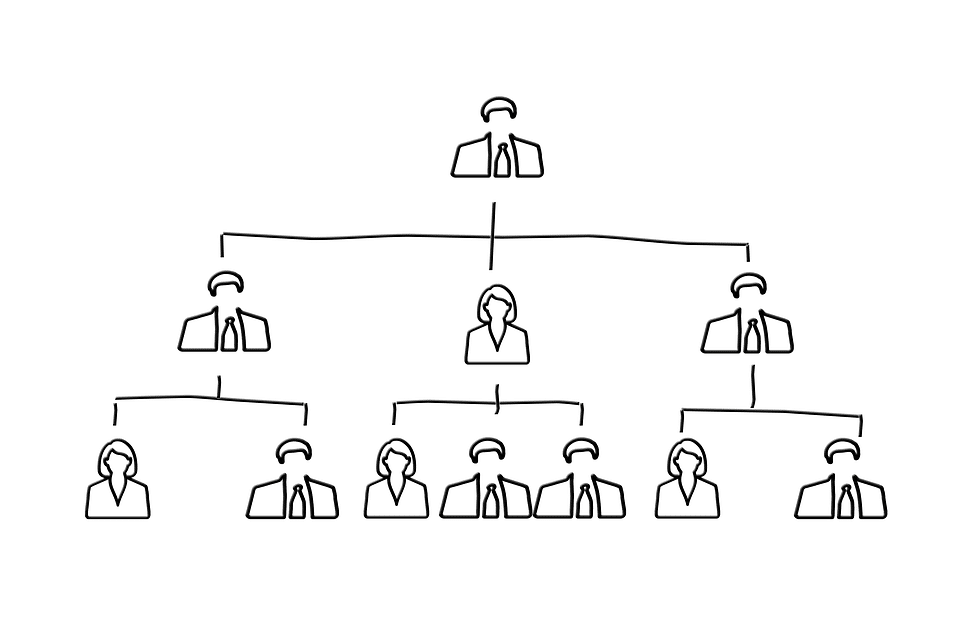
Hierarchical analytics is the process of analyzing data within the context of an organization’s structure. This method allows for examination of performance from individual contributors to entire teams and departments, and, critically, along reporting lines and manager chains. In HR, it offers a closer look at employee performance by considering positions within the company, team interactions, and leadership oversight. Approaches such as organization network analysis help you map the relationships and collaboration patterns that sit on top of the formal org chart, while a unified people analytics platform makes it possible to slice those insights by level, manager, and team to reveal operational trends not visible through conventional aggregated metrics.
Significance of HR Hierarchy for In-Depth Analysis
A well-defined HR hierarchy is essential for thorough analysis. When you analyze results along reporting lines and layers—rather than just by function—you can see how information, accountability, and support actually flow. Recent Harvard Business Review analysis of middle managers argues that these “in-between” roles act as critical connectors in this hierarchy, which makes them especially important nodes to monitor in your data. This helps provide clarity on:
- Team Performance
Identify high-functioning groups and analyze factors contributing to their effectiveness. - Managerial Practices
Assess leadership behaviors and highlight areas for refinement and support. - Employee Engagement
Detect engagement differences at various levels that may require targeted attention, using modern HR metrics dashboards to visualize where risk is concentrated and which teams or managers need support first. - Succession Planning
Pinpoint future leaders by relating performance to their hierarchical positions. - Compensation and Benefits
Correlate rewards with performance data to maintain fairness across all tiers.
How Hierarchical Analytics Transforms HR Practices
Hierarchical analytics permits HR teams to move beyond routine reporting systems. It reshapes talent management by linking workforce metrics to organizational structure. Consider the following practical case studies:
Case Study: Revising Management Practices
In a detailed analysis of a client project, one manager, Kelly, was found to lead a team with reduced billable hours and extended recruitment periods. A deeper investigation revealed that Kelly’s method was focusing on cultural compatibility and scheduling weekly individual reviews which resulted in a 12% improvement in long-term performance and a 9% rise in client satisfaction. This case helped the company adopt similar practices across other units, demonstrating the practical impact of detailed hierarchical analysis.
Kelly’s approach aligns with recent data on manager impact. According to Gallup (2025), managers account for 70% of the variance in team engagement. By implementing simple structures like weekly one-on-ones, Kelly wasn’t just being nice, she was actively managing the primary driver of employee retention, the same lever your retention and turnover analytics are designed to surface and support.
Case Study: Enhancing Employee Retention
By analyzing turnover through the lens of company hierarchy, HR leaders can identify hidden patterns like suboptimal leadership or limited growth prospects that flat reports often miss. One department, for example, saw a 14% reduction in turnover after addressing manager-specific issues identified through hierarchical data. For a step-by-step approach, our guide to strategies to reduce employee turnover provides actionable tactics you can apply to these high-risk teams.
Moving from static reporting to hierarchy-aware dashboards allows you to track engagement and headcount in real-time. This structural clarity doesn’t just solve immediate retention problems; it builds a foundation for long-term workforce stability and better leadership decisions across the entire organization.
Advantages of Hierarchical Analytics in HR
Implementing hierarchical analytics in HR offers a multitude of strategic benefits, transforming how organizations understand and manage their most valuable asset: their people.
1. Informed Decision-Making
Hierarchical analytics provides a robust framework for data-fueled insights, enabling HR leaders to move beyond surface-level observations. By allowing users to drill down from a high-level C-suite overview to granular data points at the individual manager or team level, hidden performance trends and operational bottlenecks become apparent. This deep visibility, supported by tools like SplashBI’s Workforce Analytics, ensures that HR strategies are not just reactive but proactively aligned with actual organizational performance and strategic objectives.
2. Improved Employee Engagement
Understanding employee engagement requires more than aggregate scores; it demands a nuanced view across the organizational structure. Hierarchical analytics allows organizations to pinpoint discrepancies in engagement levels across different departments, teams, or management layers. By identifying specific areas where engagement is faltering, HR can conduct targeted interventions, address underlying issues revealed through segmented data, and foster a more committed and motivated workforce.
3. Enhanced Team Productivity
Optimizing team collaboration and leadership effectiveness is critical for overall operational outcomes. With hierarchical analytics, organizations can evaluate productivity metrics within specific teams and compare them across the hierarchy.
4. Lowered Turnover
Identify underlying causes of departures and implement changes to reduce associated costs. SplashBI’s Predictive Analytics are designed to identify flight risks by analyzing various factors such as performance, tenure, and manager feedback, even categorizing employees by risk of departure through predictive modeling,
5. Robust Succession Planning
Building a resilient leadership pipeline is paramount for long-term organizational stability. Hierarchical analytics provides the data necessary for effective Workforce Planning and succession strategies. It enables organizations to identify potential leaders at various levels, assess their readiness for future roles, and track their development within the talent pipeline.
Getting Started with Hierarchical Analytics in HR
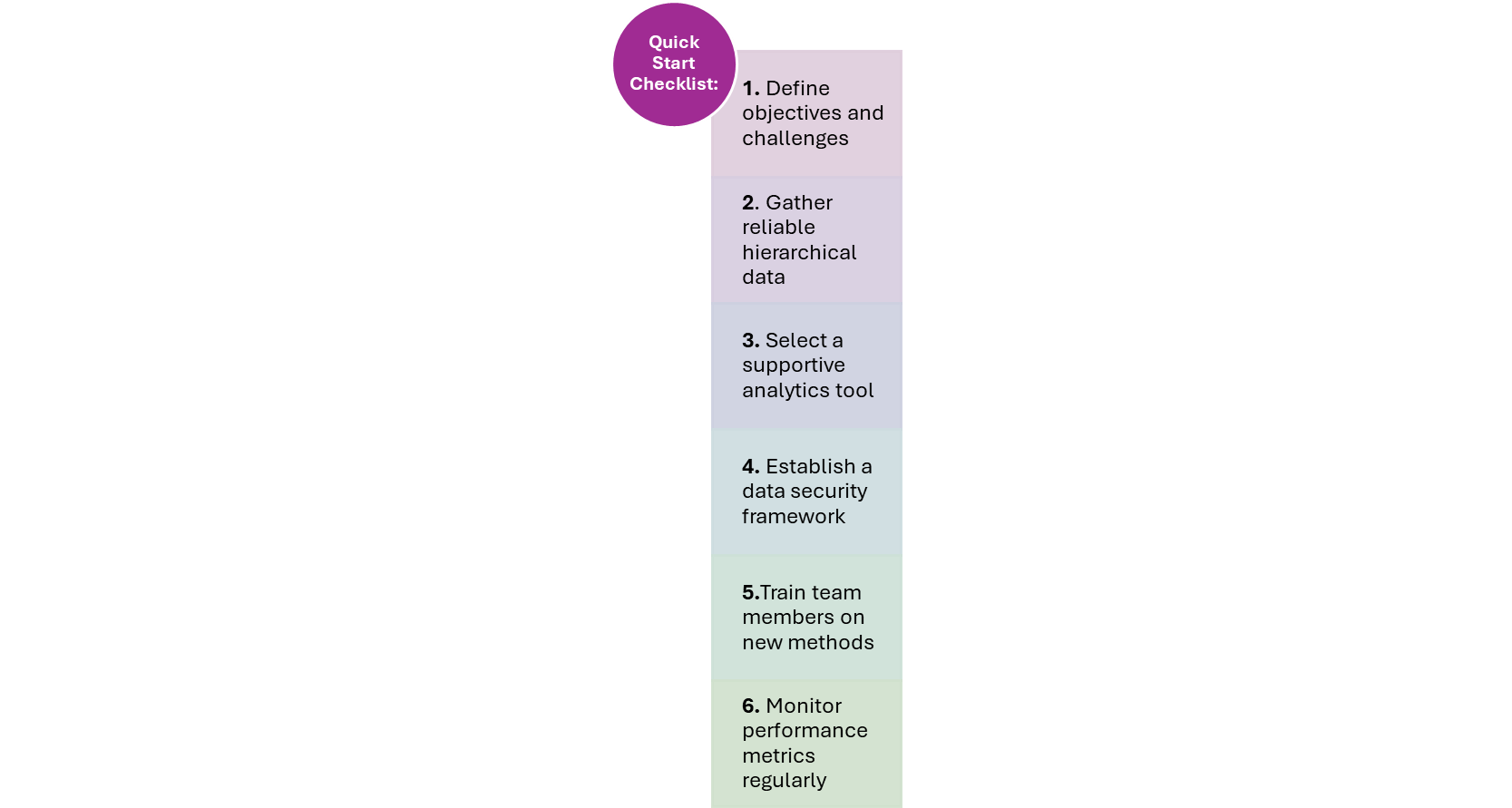
Implementing this approach requires a clear, step-by-step plan. Use these actions based on practical experiences and secure data practices:
- Establish Clear Objectives
Outline the HR challenges you intend to address, such as reducing turnover or enhancing engagement. - Collect Data from Key Sources
Aggregate data from performance reviews, engagement surveys, compensation records, and other HR tools organized by hierarchy. - Select an Appropriate Analytics Platform
Choose a tool designed for handling hierarchical data structures that works well with your current HR systems. - Develop a Data Governance Strategy
Confirm that your data is accurate, consistent, and protected by following well-defined policies. Ensure secure data handling through encryption practices and regular audits. - Provide Training for HR Teams
Organize comprehensive training sessions so that your staff is equipped to implement and analyze hierarchical data effectively. - Review and Validate Results
Continuously assess the outcomes and refine your methods based on tangible performance metrics, such as percentage improvements in engagement or productivity.
Practical implementation has shown that careful adherence to these steps can yield significant improvements, such as a 10% increment in overall team efficiency within the first quarter of implementation.