
Introduction
In today’s data-driven world, organizations are increasingly recognizing the power of people analytics to gain valuable insights into their workforce and make informed decisions. People analytics involves the collection, analysis, and interpretation of employee data to drive strategic initiatives, improve productivity, and enhance employee experience. However, implementing a people analytics project successfully requires careful planning and execution. In this blog, we will explore some essential tips and tricks to ensure a successful journey towards implementing a people analytics project.
Tip #1: Define clear objectives and outcomes.
Before embarking on a people analytics project, it is crucial to define clear objectives and outcomes. Determine what the organization wants to achieve through the project, such as improving employee retention, optimizing workforce planning, or enhancing diversity and inclusion efforts. Clear objectives will guide your data collection efforts and ensure that the project stays focused on delivering tangible results.
Tip #2: Establish stakeholder alignment.
It is vital to ensure that key stakeholders within your organization, including senior management, HR leaders, and relevant department heads, are aligned with the goals and objectives of the people analytics project. Engage them early in the process, involve them in decision-making, and address any concerns or skepticism they may have. Strong stakeholder support is essential for securing necessary resources and driving adoption across the organization.
Tip #3: Build a data-driven culture.
For a people analytics project to thrive, it is vital to foster a data-driven culture within your organization. Encourage employees to embrace data and analytics by providing training and resources to enhance their data literacy skills. Communicate the value and benefits of people analytics, emphasizing how data-driven insights can lead to better decision-making, increased efficiency, and improved employee experiences.
Tip #4: Ensuring data quality and privacy.
With data comes security! High-quality and accurate data are the foundation of any successful people analytics project. Establish data governance processes to ensure data integrity, including regular data cleaning, validation, and documentation. Safeguard employee privacy by complying with relevant data protection regulations and obtaining necessary consents. Transparent communication regarding data handling practices builds trust among employees and ensures ethical use of data.
Tip #5: Selecting the right tools and technology.
Choosing appropriate technology and analytics tools that align with your organization’s needs and resources. Considering factors such as scalability, user-friendliness, integration capabilities, and data security when selecting a people analytics platform. Collaborating with IT professionals to evaluate various options and select a solution that supports your project goals and enables efficient data analysis.
Tip #6: Start small and iterate.
At SplashBI, we know that implementing a people analytics project can be complex, so it’s advisable to start with small, focused initiatives. Selecting a specific use case or problem to solve, such as identifying factors influencing employee turnover or predicting high-performing candidates. By starting small, you can iterate quickly, learn from the process, and make necessary adjustments before scaling up the project. This iterative approach allows you to demonstrate value early on and gain buy-in from stakeholders.
Compiling data coming from various sources can be tricky, time-consuming, and difficult. So, it is beneficial to foster cross-functional collaboration: People analytics projects often require collaboration between HR, IT, data scientists, and business units. Encourage cross-functional collaboration by creating multidisciplinary teams that bring together diverse perspectives and expertise. Foster a collaborative environment where team members can share knowledge, exchange ideas, and collectively work towards project success.
Well, we got the data and got the insights. Now, how to use those insights effectively and progressively is up to the way we communicate.
Tip #7. Effectively communicate and Act.
Data insights derived from people analytics are valuable only when such complex analytics and findings can be translated into clear, actionable recommendations that resonate with different stakeholders. Use visualizations, storytelling techniques, and accessible language to communicate insights in a compelling manner. Tailoring your communication strategies to different audience groups to ensure maximum impact and understanding.
Tip #8: Monitoring and Measuring Progress.
Establish key performance indicators (KPIs) and metrics to track the progress and impact of your people analytics project. Regularly monitor and measure the outcomes against the defined objectives. Evaluate the effectiveness of your interventions and adjust as necessary. Continuous monitoring ensures that your project stays on track and helps identify areas for improvement.
Imagine having SplashBI for HR as your ally in the realm of people analytics. With its ready-to-use HR metrics, smooth system integration, advanced visualizations, AI-powered predictions, and data security, it’s like having a trusted guide. By adopting our solution, you’re uncovering HR insights, boosting engagement, making well-informed choices and much more.
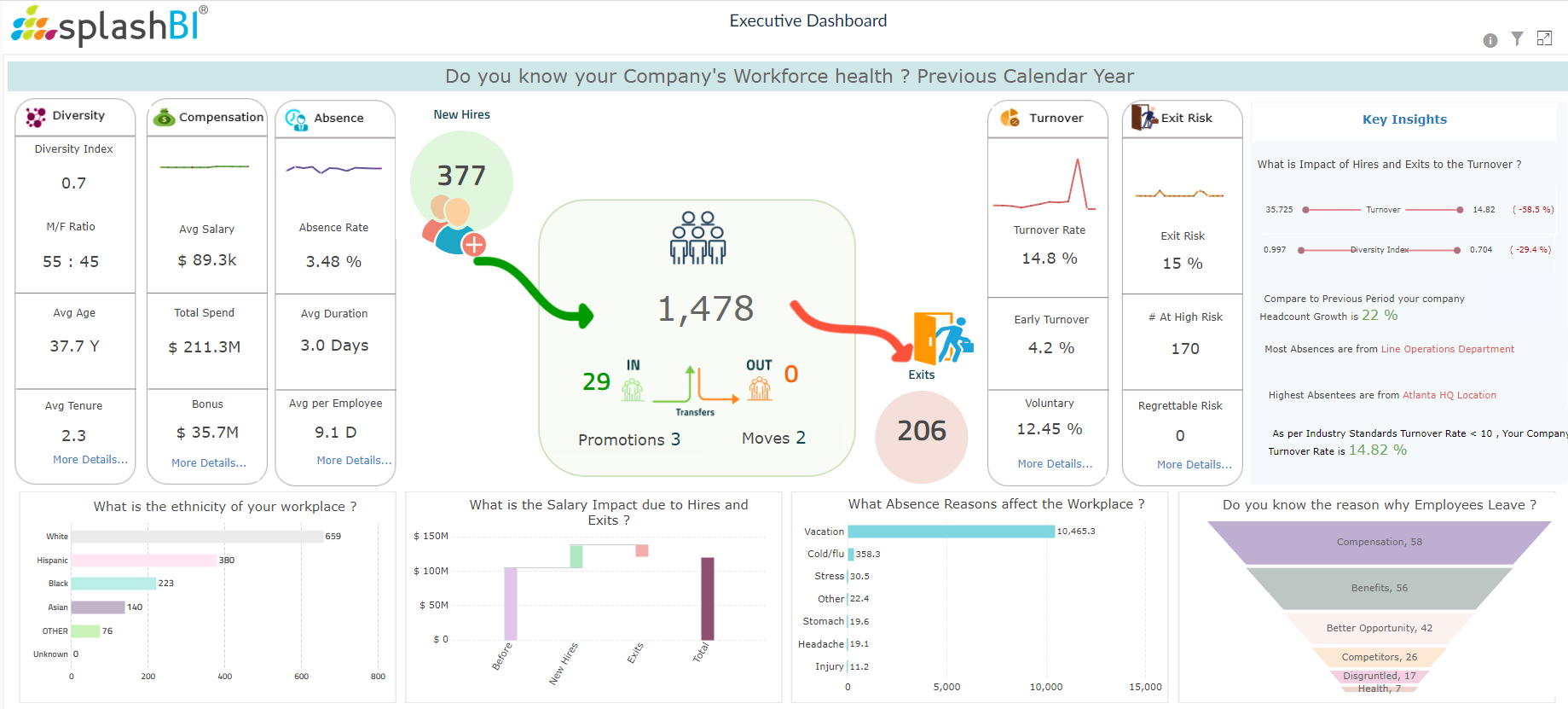
Picture this journey:
- Setting clear goals.
- Aligning minds.
- Safeguarding data quality.
- Picking tech that fits.
- Taking small steps.
- Fostering teamwork.
- Sharing insights meaningfully.
- Keeping tabs on progress.
With us, the power of people analytics has become a force for strategic decisions, adept talent management, and creating an even richer employee experience.