Unconscious bias in the hiring process is a significant challenge an organization faces when striving for diversity and inclusion. These biases, often unintentional and influenced by societal stereotypes, can lead to unfair hiring decisions and hinder recruiting diverse talent. However, organizations can identify and address unconscious bias with people analytics, leading to a more equitable and inclusive hiring process.
Overcoming Bias in Hiring with Analytics
Understanding Unconscious Bias in Hiring
Unconscious bias refers to the automatic and unintentional biases that individuals hold towards certain groups of people. In the hiring context, these biases can manifest in various forms, such as affinity bias, confirmation bias, and the halo effect. Research from McKinsey & Company reveals a strong link between diversity in executive teams and financial performance. Their analysis found that companies in the top quartile for ethnic and cultural diversity on executive teams were 33% more likely to have industry-leading profitability. Moreover, this research underscores the importance of inclusive hiring and leadership practices in driving organizational success. Thus, HR professionals must recognize and address these biases to ensure a fair and objective hiring process.The Role of People Analytics in Addressing Unconscious Bias
People analytics, the practice of using data and statistical methods to gain insights into HR processes, plays a pivotal role in combating unconscious bias. A Deloitte survey found that companies utilizing data-driven approaches in their HR processes are 3 times more likely to improve their recruitment efforts. Moreover, an IBM study revealed that 67% of HR professionals believe analytics help make the hiring process fairer by identifying patterns and trends that may indicate the presence of unconscious bias.Using Data to Mitigate Unconscious Bias
Identifying unconscious bias is the first step; mitigating its impact requires actionable strategies: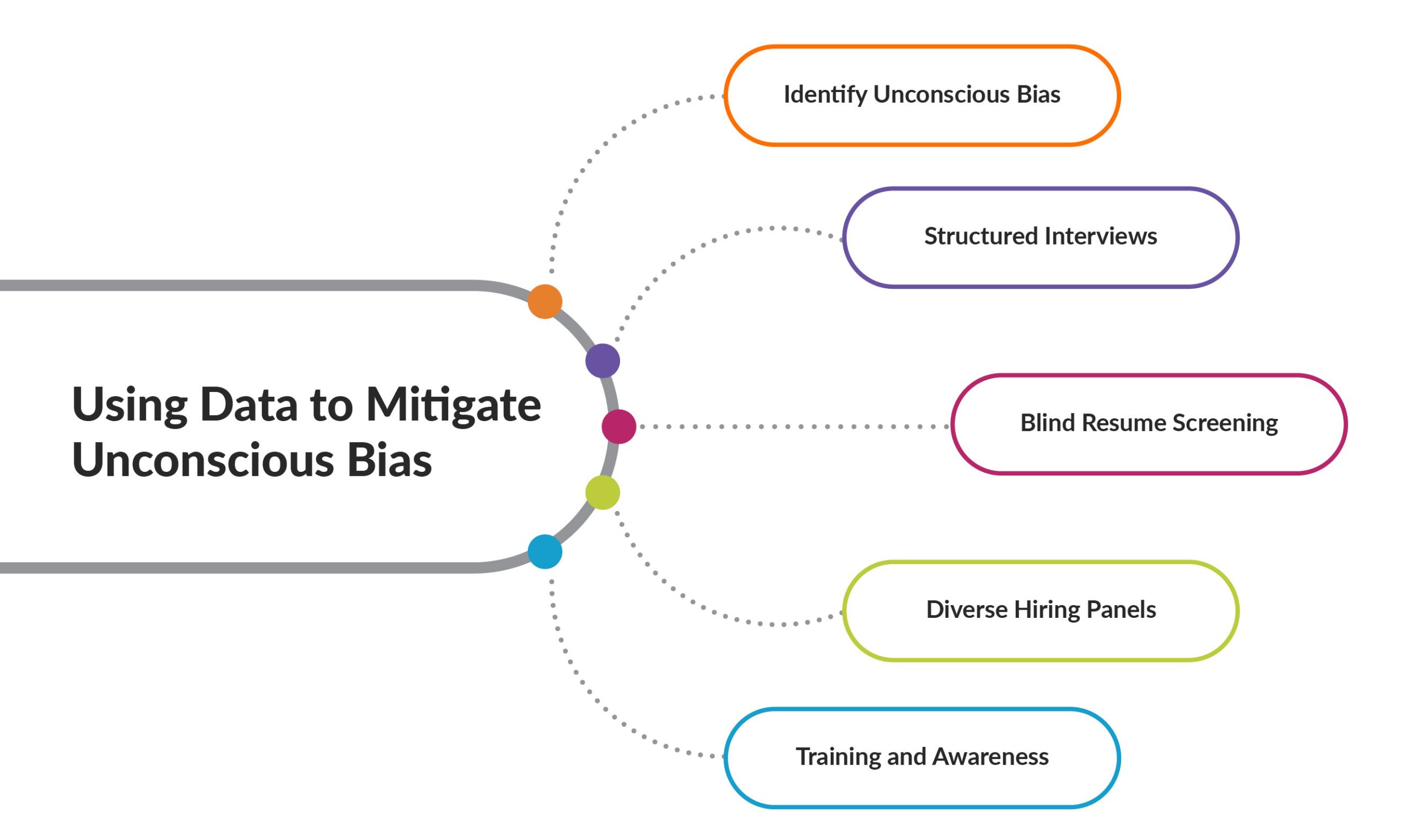
-
Structured Interviews:
Implementing structured interviews with standardized questions minimizes bias. Google’s re: Work initiative reports that structured interviewing predicts on-the-job performance more than unstructured interviews. -
Blind Resume Screening:
Removing personally identifiable information from resumes helps prevent bias. Research in the “Administrative Science Quarterly” showed that blind auditions increased the likelihood of female musicians being selected by 30%. -
Diverse Hiring Panels:
Including diverse interviewers can provide different perspectives and help mitigate bias. McKinsey & Company found that companies with diverse management were 35% more likely to have financial returns above their industry mean. -
Training and Awareness:
Bias training can significantly increase awareness. A study in the Journal of Applied Psychology found that such training, combined with other diversity initiatives, can increase awareness of unconscious bias by up to 46%.
Measuring the Effectiveness of Bias Mitigation Strategies
Measuring the impact of these strategies is essential. According to PwC, 75% of organizations that measure their diversity and inclusion efforts see an improvement in business performance. Salesforce, for instance, reported a 33% increase in the representation of underrepresented groups in leadership roles after implementing diversity and inclusion strategies, including bias training and people analytics.Conclusion
The challenge of unconscious bias in the hiring process is significant but not insurmountable. With the support of people analytics solutions like SplashBI, organizations can proactively identify and mitigate bias, leading to a more equitable and inclusive hiring process. By leveraging data-driven insights, utilizing ready-to-use metrics, and implementing strategic interventions, HR professionals can significantly advance their DEI&B efforts, ultimately fostering a diverse and talented workforce.Frequently Asked Questions
What key performance indicators (KPIs) should organizations track to measure diversity and inclusion effectiveness and its business impact?
Organizations should track KPIs such as employee turnover, advancement demographics, and engagement survey results to measure effectiveness. SplashBI emphasizes setting company-level and group-level goals. These metrics, alongside recruitment diversity indexes, drive accountability and profitability.
How can data analytics identify and address diversity gaps or biases within an organization's talent acquisition and development processes?
Data analytics identifies diversity gaps by tracking applicant rejections by demographics and analyzing hiring funnel biases. SplashBI's People Analytics module offers dashboards that visualize candidate pipelines, gender comparisons and hired vs. rejected rates by employment category, enabling organizations to pinpoint and address inequities in talent acquisition and development.
What are some best practices for integrating diversity into hiring processes?
Best practices include mitigating bias with blind interviewing, diversity-friendly job descriptions, and ensuring minority representation on hiring teams. Organizations should also explore diverse sourcing channels and engage with communities.
Which stages of the hiring funnel are most vulnerable to unconscious bias, and what people analytics metrics can reveal it?
The applicant pool and hiring panel stages are most vulnerable to unconscious bias. SplashBI's People Analytics can reveal this by tracking applicant pool diversity and hiring panel diversity, as well as analyzing hired/rejected percentages across employment categories and departments.
How can people analytics measure whether structured interviews, blind screening, and diverse panels are actually reducing bias over time?
People Analytics can measure bias reduction by analyzing objective metrics and patterns of inequity across the organization. SplashBI's HR Dashboard Insights reveal hidden biases in interview processes based on ethnicity, gender, and age diversity. This allows for tracking the diversity index and identifying ethnicity groups most hired or rejected.