
Almost every other company these days requires business intelligence tools to stay in the competition. Companies of all sizes and stages need BI tools to make smarter and informed business decisions, manage, and analyze business data. BI tools help in visualizing the reports generated and maximize revenue outcomes.
The primary benefit of business intelligence tools is to provide a solution that is suitable for your business. It customizes and offers a solution that is most suitable to the company and is relevant to your business goals. With business intelligence and business analytics, your company can have an account of all the impacts it has had (whether they’re good or bad.) Data analytics plays a vital role in helping your company devise the best plan possible. Business intelligence systems help companies move towards the right direction and make smart choices from the business data collected and analyzed.
Business Intelligence (BI) software helps companies to develop new strategies by analyzing the current market trends and say above their competitors. It allows companies to score new opportunities; complete customer satisfaction based on data-driven reports. It helps optimize service for the clients, improves productivity, and monitors all the data from anywhere in real-time.
Benefits of Business Intelligence Tools
The benefits of business intelligence tools are plentiful. The most advantageous of them are:
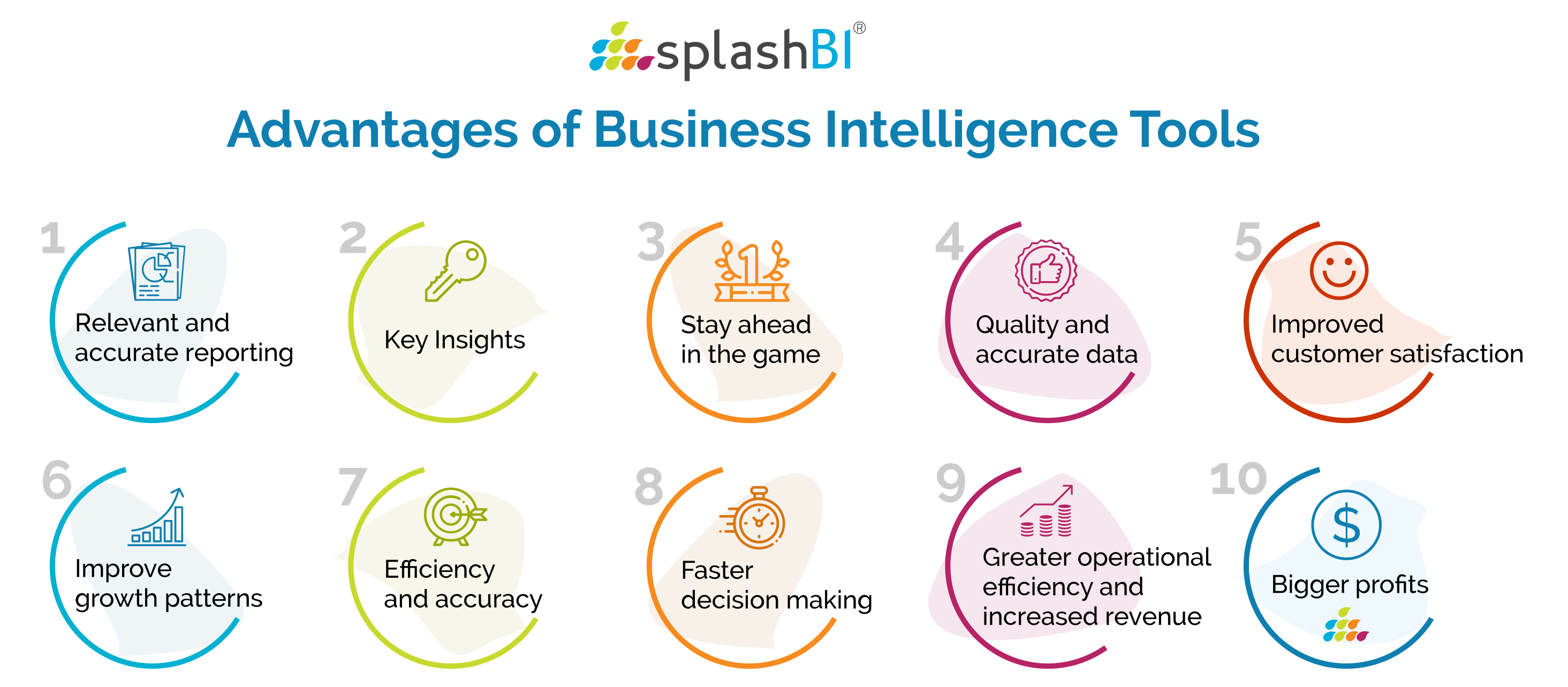
1. Relevant and accurate reporting:
Using different kinds of data sources, employees can customize their reports and monitor KPIs. Real-time generated reports offer the most pertinent data, which help companies make faster and better decisions. Data from sales, finance, or operations are used to create easily accessible reports, have great visualizations with the help of charts, graphs, tables, etc. These reports offer faster insights, access, accuracy, and relevancy.
2. Key Insights:
BI reporting tools assist in monitoring. To get the complete insight on revenue, losses, gains, the productivity of the employees, performances of the employees (individual and team-based.) It provides valuable information about the positives and the negatives. With these tools, companies can easily track the metrics and be current with what’s happening and what’s to come by setting up alerts, getting real-time information on the KPIs, and alerting any pitfalls that otherwise could have gone unnoticed.
3. Stay ahead in the game:
Companies of all sizes have vast amounts of data. Moreover, managing and using data for business decisions provides a competitive edge. BI offers incredible benefits with the help of this data in terms of forecasting, budgeting, planning, and staying on top of things via analysis. Competitive analysis helps companies to know the competition and the performance of their competitors as well. This, in turn, leads to finding out how to differentiate one’s products from others. It goes the same for services as well.
4. Quality and accurate data:
The success of any kind within an enterprise is data-dependent. Quality of data defines the quality of the company and its success. Any inaccuracies or flaws in the data can turn businesses upside down. BI tools help businesses in cleaning up data, creating data of high quality, collecting, updating, and analyzing data to gain the most relevant insight on what’s going on within the company.
5. Improved customer satisfaction:
Business intelligence software mainly helps companies to not just learn about their employees but their customers too. When it comes to customer behavior, user personas, feedback, BI lets you in on all the insights. These BI tools help to identify what’s lacking with your services or products and enhance customer satisfaction by making necessary changes. Real-time data on the customer’s feedback help in bringing corrective changes and deliver excellent customer service and satisfaction.
6. Improve growth patterns:
BI assists companies in gaining a competitive edge by helping them find new opportunities and build smarter strategies. With the help of all the data, you can identify market trends and help improve profit margins for the company. New sales trends can be identified by leveraging data from the internal and external markets, analyzing the data. The market conditions can help spot any business issues that can otherwise go unnoticed.
7. Efficiency and accuracy:
BI tools offer a single source of information; it helps the employees or the executive hierarchy to spend more time on productivity and less time on managing data. This way, employees can focus on producing reports and timely deliverables in real-time. This accurate information leads to better decision making and helps companies achieve long and short-term goals.
8. Faster decision making:
BI reduces the times a company has to lose a customer, revenue, or deal with inaccurate information or slow processes. It is essential in gaining a competitive edge for companies to make faster and accurate decisions by leveraging the existing data, at the right time, and improve decision making.
9. Greater operational efficiency and increased revenue:
BI tools offer business data, which makes the leaders and employees of a company think about the decisions made, processes implemented, and strategies executed. Getting a 360-degree view on all the dimensions to help companies identify issues and improve operations, increased sales, and in turn, increase revenue.
10. Bigger profits:
Most businesses find profit margins as a big concern. BI tools can analyze from the enormous volumes of data any discrepancies, inefficiencies, errors, etc. It helps expand profit margins, and the sales teams get better insights for future sales and analyze where to spend the budgets in the future.
How is SplashBI Different?
SplashBI helps organizations make business decisions by giving instant access to data from diverse systems in the form of reports, visualizations, & trends. SplashBI is available both on the Cloud and on-premise. SplashBI offers insightful pre-built content, powerful ad-hoc reporting for immediate ROI. Its data models allow for fast-track-low-cost implementations. There is no need to spend hefty amounts on consulting and services to get the Business Intelligence tools your team needs to achieve your competitive advantage.
To Sum Up!
Organizations must make informed decisions to enhance their performance. Business intelligence tools or BI tools have all the necessary accessories to make this happen. The belief that business intelligence tools are available only for large enterprises does not hold anymore. BI is for everyone, be it large or small enterprise.