
August 14 2019
How to Manage Your Sales Pipeline?
August 14 2019
Introduction
What is sales pipeline management?
Sales pipeline management is the discipline of monitoring and guiding every deal through a set of clearly defined stages. By mapping where each prospect sits in the buying journey you always know what action to take next and how healthy your revenue outlook really is.
Improve visibility into active deals and where they stand
Spot gaps and bottlenecks before they hurt performance
Strengthen forecasting accuracy with clearer pipeline health
Clarify next steps so you can prioritize the right opportunities
Key Takeaways
Definition: Sales pipeline management is a systematic process of tracking leads from initial contact to closing.
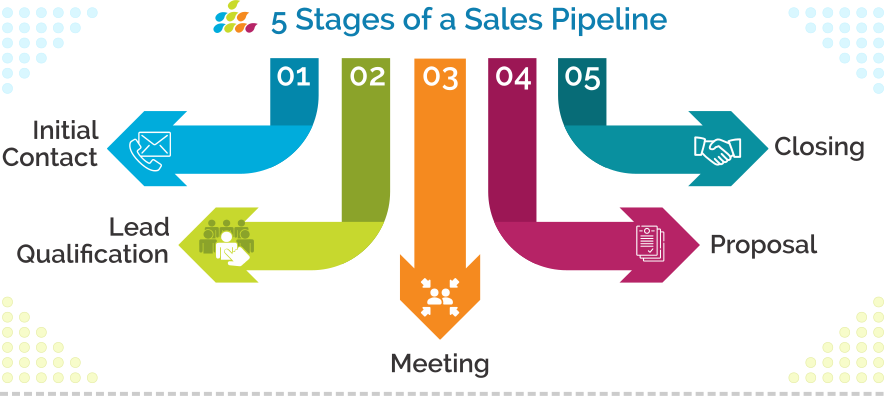
Core Stages: A standard pipeline consists of five stages: Initial Contact Lead Qualification Meeting Proposal and Closing.
Maintenance: Regular “”cleaning”” of stalled leads is essential to maintain accurate sales forecasting and velocity.
Data-Driven: Success relies on measuring key metrics such as deal size pipeline value and sales velocity.
Optimization: Using interactive dashboards helps visualize bottlenecks and improve conversion rates at each stage.
A sales pipeline enables companies to view the flow and volume of their revenue opportunities at any given period.
Pipelines provide snapshots of key sales elements including:
Sales opportunities
Open deals
Sales potential
Aggregate monetary values
Different stages of a sales pipeline
First understand the stages of your sales pipeline
1. Initial contact
This is where you first contact potential customers—often through marketing campaigns that generate initial interest. These leads enter your pipeline but not all will become paying customers.
2. Lead qualification
After you make contact you need to gauge which leads are worth your time and effort. At this stage you’ll identify which leads are worth pursuing based on their interest and fit. Leads showing strong purchase intent become sales-qualified leads—the ones your team should prioritize.
3. Meeting
Once you’ve qualified a lead provide them with detailed product information through demos or tailored presentations. Sales demos and meetings let you deliver tailored presentations that address each prospect’s specific needs.
4. Proposal
By now you understand each opportunity’s potential value and how much revenue it could generate. At this stage you’ve either sent the proposal or you’re preparing one to send.
5. Negotiation
This is where you align on pricing terms and final requirements to reach an agreement before close.
6. Closing
Most deals require frequent follow-ups to close successfully. Opportunities can stall at this stage if you don’t maintain momentum. If you’ve managed to win your customer the paperwork is signed and you then move on to the next sales opportunity. Mark won deals as closed-won and lost deals as closed-lost then clear them from your active pipeline.
Also download – Sales Pipeline Management PDF
How to Manage Your Sales Pipeline
The 10 best tips for sales pipeline management
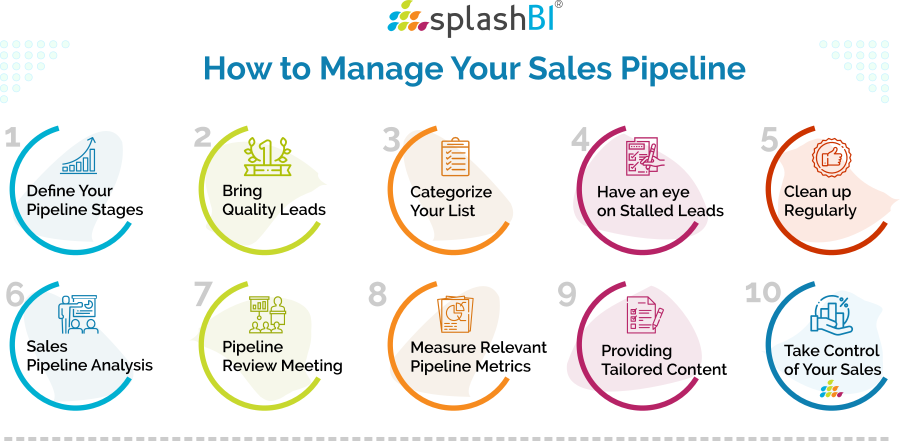
1. Define Your Pipeline Stages
Start by clearly defining each stage of your sales process from initial contact through close. The basic steps begin with the initial contact and end with closing a deal for every company. Clear pipeline stages improve your sales forecasting and help you identify where prospects need attention. Each stage should represent a clear decision point that moves prospects closer to purchase.
2. Bring in quality leads
Once you’ve defined your stages strengthen your lead generation with tools that bring qualified prospects into your pipeline. Better lead generation means more qualified opportunities in your pipeline—and faster revenue growth. Consistent prospecting keeps your pipeline full of qualified opportunities ready to convert.
3. Categorize your leads
After closing each deal—won or lost—prioritize the opportunities most likely to convert. Categorize your leads so you can quickly identify which ones need immediate attention. Lead scoring helps you focus on high-value prospects and increase conversion rates.
4. Watch for stalled leads
Deals move through your pipeline at different speeds—and the fastest movers are usually the most likely to close. Track deal velocity—faster-moving opportunities typically have higher close rates. Some opportunities stall without clear blockers—often due to unclear next steps or lack of urgency. When deals stall re-engage with targeted outreach to identify blockers and create momentum. Monitor deal age and engagement levels to catch stalled opportunities before they go cold.
5. Clean up your pipeline regularly
Stalled deals slow your pipeline velocity and skew your forecasts. They distort your forecasts and consume time you could spend on deals ready to close. Identify deals unlikely to close then either re-engage with a new approach or remove them from your pipeline. Make daily pipeline cleanup part of your routine to keep qualified deals moving forward.
6. Analyze your sales pipeline
Regular pipeline analysis gives you the data and confidence you need to hit your targets consistently. Daily demands can make it hard to prioritize pipeline analysis—but regular reviews directly impact your close rates. Organizations that train their teams on pipeline analysis see measurably higher revenue growth.
7. Hold pipeline review meetings
Schedule pipeline review meetings twice monthly to maintain deal momentum and forecast accuracy. A healthy pipeline means smoother conversions and clearer visibility into whether you’ll hit upcoming targets. Use these meetings to identify bottlenecks and gather team input on process improvements.
8. Measure Relevant Pipeline Metrics
Effective pipeline management requires tracking the right metrics. Track the metrics that directly impact your close rates and forecast accuracy.
SplashBI’s interactive dashboard helps you in making sense of all the information you extract. They help you in optimizing your sales process by highlighting high-value activities.
Key sales pipeline metrics include:
Number of deals
Pipeline value
New leads per month
Deals size
Sales velocity
9. Provide tailored content
Beyond calls and emails prospects often need detailed product information to move forward. Tailored content helps prospects get the information they need to move to the next stage. Sales and marketing alignment ensures you create content that addresses real prospect questions and concerns.
10. Take control of your sales process
From optimizing your sales funnel to improve the quality of your lead to help sales reps meet their sales targets you can make the most of your sales processes and sales opportunities with sales pipeline management.
Conclusion
Effective pipeline management helps you optimize your funnel improve lead quality and hit your revenue targets consistently.
Using a tool like SplashBI which offers an interactive dashboard loaded with features you can visualize and improve each stage of your sales pipeline.
Ready to optimize your sales pipeline? Request a demo of SplashBI today to see how our interactive dashboards can transform your sales process.
“successsuccessHow to Manage Your Sales Pipeline?
August 14, 2019

Introduction
What is sales pipeline management?
Sales pipeline management is the discipline of monitoring and guiding every deal through a set of clearly defined stages. By mapping where each prospect sits in the buying journey, you always know what action to take next and how healthy your revenue outlook really is. This is crucial in a landscape where the global market is projected to reach USD 7.2 billion by 2031.
Improve visibility into active deals and where they stand
Spot gaps and bottlenecks before they hurt performance
Strengthen forecasting accuracy with clearer pipeline health
Clarify next steps so you can prioritize the right opportunities
Key Takeaways
Definition: Sales pipeline management is a systematic process of tracking leads from initial contact to closing.
Core Stages: A standard pipeline consists of five stages: Initial Contact, Lead Qualification, Meeting, Proposal, and Closing.
Maintenance: Regular “cleaning” of stalled leads is essential to maintain accurate sales forecasting and velocity.
Data-Driven: Success relies on measuring key metrics such as deal size, pipeline value, and sales velocity.
Optimization: Using interactive dashboards helps visualize bottlenecks and improve conversion rates at each stage.
A sales pipeline enables companies to view the flow and volume of their revenue opportunities at any given period.
Pipelines provide snapshots of key sales elements, including:
Sales opportunities
Open deals
Aggregate monetary values
Different stages of a sales pipeline
First, understand the stages of your sales pipeline
1. Initial contact
This is where you first contact potential customers—often through marketing campaigns that generate initial interest. These leads enter your pipeline, but not all will become paying customers.
2. Lead qualification
After you make contact, you need to gauge which leads are worth your time and effort. Industry research shows that only 13% of MQLs convert to SQLs, making this stage critical. You must identify which leads are worth pursuing based on their interest and fit. Leads showing strong purchase intent become sales-qualified leads—the ones your team should prioritize.
3. Meeting
Once you’ve qualified a lead, provide them with detailed product information through demos or tailored presentations. Sales demos and meetings let you deliver tailored presentations that address each prospect’s specific needs.
4. Proposal
By now, you understand each opportunity’s potential value and how much revenue it could generate. At this stage, you’ve either sent the proposal or you’re preparing one to send.
5. Negotiation
This is where you align on pricing, terms, and final requirements to reach an agreement before close.
6. Closing
Most deals require frequent follow-ups to close successfully. Opportunities can stall at this stage if you don’t maintain momentum. If you’ve managed to win your customer, the paperwork is signed, and you then move on to the next sales opportunity. Mark won deals as closed-won and lost deals as closed-lost, then clear them from your active pipeline.
Also download – Sales Pipeline Management PDF
How to Manage Your Sales Pipeline
The 10 best tips for sales pipeline management
1. Define Your Pipeline Stages
Start by clearly defining each stage of your sales process, from initial contact through close. The basic steps begin with the initial contact and end with closing a deal for every company. Clear pipeline stages improve your sales forecasting and help you identify where prospects need attention. Each stage should represent a clear decision point that moves prospects closer to purchase.
2. Bring in quality leads
Once you’ve defined your stages, strengthen your lead generation with tools that bring qualified prospects into your pipeline. Better lead generation means more qualified opportunities in your pipeline—and faster revenue growth. Consistent prospecting keeps your pipeline full of qualified opportunities ready to convert.
3. Categorize your leads
After closing each deal—won or lost—prioritize the opportunities most likely to convert. Categorize your leads so you can quickly identify which ones need immediate attention. Lead scoring helps you focus on high-value prospects and increase conversion rates.
4. Watch for stalled leads
Deals move through your pipeline at different speeds—and the fastest movers are usually the most likely to close. Track deal velocity—faster-moving opportunities typically have higher close rates. Some opportunities stall without clear blockers—often due to unclear next steps or lack of urgency. When deals stall, re-engage with targeted outreach to identify blockers and create momentum. Monitor deal age and engagement levels to catch stalled opportunities before they go cold.
5. Clean up your pipeline regularly
Stalled deals slow your pipeline velocity and skew your forecasts. They distort your forecasts and consume time you could spend on deals ready to close. Identify deals unlikely to close, then either re-engage with a new approach or remove them from your pipeline. Make daily pipeline cleanup part of your routine to keep qualified deals moving forward.
6. Analyze your sales pipeline
Regular pipeline analysis gives you the data and confidence you need to hit your targets consistently. In fact, CRM applications can increase sales by 29% when properly implemented. Daily demands can make it hard to prioritize pipeline analysis—but regular reviews directly impact your close rates. Organizations that train their teams on pipeline analysis see measurably higher revenue growth.
7. Hold pipeline review meetings
Schedule pipeline review meetings twice monthly to maintain deal momentum and forecast accuracy. A healthy pipeline means smoother conversions and clearer visibility into whether you’ll hit upcoming targets. Use these meetings to identify bottlenecks and gather team input on process improvements.
8. Measure Relevant Pipeline Metrics
Effective pipeline management requires tracking the right metrics. Track the metrics that directly impact your close rates and forecast accuracy.
SplashBI’s interactive dashboard helps you in making sense of all the information you extract. They help you in optimizing your sales process by highlighting high-value activities.
Key sales pipeline metrics include:
Number of deals
Pipeline value
New leads per month
Deals size
Sales velocity
9. Provide tailored content
Beyond calls and emails, prospects often need detailed product information to move forward. Tailored content helps prospects get the information they need to move to the next stage. Sales and marketing alignment ensures you create content that addresses real prospect questions and concerns.
10. Take control of your sales process
From optimizing your sales funnel to improve the quality of your lead to help sales reps meet their sales targets, you can make the most of your sales processes, and sales opportunities with sales pipeline management.
Conclusion
Effective pipeline management helps you optimize your funnel, improve lead quality, and hit your revenue targets consistently.
Using a tool like SplashBI which offers an interactive dashboard loaded with features, you can visualize and improve each stage of your sales pipeline.
Ready to optimize your sales pipeline? Request a demo of SplashBI today to see how our interactive dashboards can transform your sales process.

How to Manage Your Sales Pipeline?
August 14, 2019

Introduction
What is sales pipeline management?
Sales pipeline management is the discipline of monitoring and guiding every deal through a set of clearly defined stages. By mapping where each prospect sits in the buying journey, you always know what action to take next and how healthy your revenue outlook really is. This is crucial in a landscape where the global market is projected to reach USD 7.2 billion by 2031.
Improve visibility into active deals and where they stand
Spot gaps and bottlenecks before they hurt performance
Strengthen forecasting accuracy with clearer pipeline health
Clarify next steps so you can prioritize the right opportunities
Key Takeaways
Definition: Sales pipeline management is a systematic process of tracking leads from initial contact to closing.
Core Stages: A standard pipeline consists of five stages: Initial Contact, Lead Qualification, Meeting, Proposal, and Closing.
Maintenance: Regular “cleaning” of stalled leads is essential to maintain accurate sales forecasting and velocity.
Data-Driven: Success relies on measuring key metrics such as deal size, pipeline value, and sales velocity.
Optimization: Using interactive dashboards helps visualize bottlenecks and improve conversion rates at each stage.
A sales pipeline enables companies to view the flow and volume of their revenue opportunities at any given period.
Pipelines provide snapshots of key sales elements, including:
Sales opportunities
Open deals
Aggregate monetary values
Different stages of a sales pipeline
First, understand the stages of your sales pipeline
1. Initial contact
This is where you first contact potential customers—often through marketing campaigns that generate initial interest. These leads enter your pipeline, but not all will become paying customers.
2. Lead qualification
After you make contact, you need to gauge which leads are worth your time and effort. Industry research shows that only 13% of MQLs convert to SQLs, making this stage critical. You must identify which leads are worth pursuing based on their interest and fit. Leads showing strong purchase intent become sales-qualified leads—the ones your team should prioritize.
3. Meeting
Once you’ve qualified a lead, provide them with detailed product information through demos or tailored presentations. Sales demos and meetings let you deliver tailored presentations that address each prospect’s specific needs.
4. Proposal
By now, you understand each opportunity’s potential value and how much revenue it could generate. At this stage, you’ve either sent the proposal or you’re preparing one to send.
5. Negotiation
This is where you align on pricing, terms, and final requirements to reach an agreement before close.
6. Closing
Most deals require frequent follow-ups to close successfully. Opportunities can stall at this stage if you don’t maintain momentum. If you’ve managed to win your customer, the paperwork is signed, and you then move on to the next sales opportunity. Mark won deals as closed-won and lost deals as closed-lost, then clear them from your active pipeline.
Also download – Sales Pipeline Management PDF
How to Manage Your Sales Pipeline
The 10 best tips for sales pipeline management
1. Define Your Pipeline Stages
Start by clearly defining each stage of your sales process, from initial contact through close. The basic steps begin with the initial contact and end with closing a deal for every company. Clear pipeline stages improve your sales forecasting and help you identify where prospects need attention. Each stage should represent a clear decision point that moves prospects closer to purchase.
2. Bring in quality leads
Once you’ve defined your stages, strengthen your lead generation with tools that bring qualified prospects into your pipeline. Better lead generation means more qualified opportunities in your pipeline—and faster revenue growth. Consistent prospecting keeps your pipeline full of qualified opportunities ready to convert.
3. Categorize your leads
After closing each deal—won or lost—prioritize the opportunities most likely to convert. Categorize your leads so you can quickly identify which ones need immediate attention. Lead scoring helps you focus on high-value prospects and increase conversion rates.
4. Watch for stalled leads
Deals move through your pipeline at different speeds—and the fastest movers are usually the most likely to close. Track deal velocity—faster-moving opportunities typically have higher close rates. Some opportunities stall without clear blockers—often due to unclear next steps or lack of urgency. When deals stall, re-engage with targeted outreach to identify blockers and create momentum. Monitor deal age and engagement levels to catch stalled opportunities before they go cold.
5. Clean up your pipeline regularly
Stalled deals slow your pipeline velocity and skew your forecasts. They distort your forecasts and consume time you could spend on deals ready to close. Identify deals unlikely to close, then either re-engage with a new approach or remove them from your pipeline. Make daily pipeline cleanup part of your routine to keep qualified deals moving forward.
6. Analyze your sales pipeline
Regular pipeline analysis gives you the data and confidence you need to hit your targets consistently. In fact, CRM applications can increase sales by 29% when properly implemented. Daily demands can make it hard to prioritize pipeline analysis—but regular reviews directly impact your close rates. Organizations that train their teams on pipeline analysis see measurably higher revenue growth.
7. Hold pipeline review meetings
Schedule pipeline review meetings twice monthly to maintain deal momentum and forecast accuracy. A healthy pipeline means smoother conversions and clearer visibility into whether you’ll hit upcoming targets. Use these meetings to identify bottlenecks and gather team input on process improvements.
8. Measure Relevant Pipeline Metrics
Effective pipeline management requires tracking the right metrics. Track the metrics that directly impact your close rates and forecast accuracy.
SplashBI’s interactive dashboard helps you in making sense of all the information you extract. They help you in optimizing your sales process by highlighting high-value activities.
Key sales pipeline metrics include:
Number of deals
Pipeline value
New leads per month
Deals size
Sales velocity
9. Provide tailored content
Beyond calls and emails, prospects often need detailed product information to move forward. Tailored content helps prospects get the information they need to move to the next stage. Sales and marketing alignment ensures you create content that addresses real prospect questions and concerns.
10. Take control of your sales process
From optimizing your sales funnel to improve the quality of your lead to help sales reps meet their sales targets, you can make the most of your sales processes, and sales opportunities with sales pipeline management.
Conclusion
Effective pipeline management helps you optimize your funnel, improve lead quality, and hit your revenue targets consistently.
Using a tool like SplashBI which offers an interactive dashboard loaded with features, you can visualize and improve each stage of your sales pipeline.
Ready to optimize your sales pipeline? Request a demo of SplashBI today to see how our interactive dashboards can transform your sales process.
Frequently Asked Questions
What are the 5 stages of a sales pipeline?
The five core stages are Initial Contact, Lead Qualification, Meeting, Proposal, and Closing. Each stage represents a decision point that moves prospects closer to purchase.
What are the 7 stages of sales pipeline?
A seven-stage pipeline includes lead generation, lead qualifying, contacting and nurturing, proposal, negotiation, closing the sale, and post-sale follow-up. The extended model adds negotiation and post-sale activities to the basic five-stage framework.
What tools can manage a sales pipeline?
CRM platforms with interactive dashboards track deals through each stage and provide visibility into pipeline health. SplashBI can be used for Sales and Marketing Reporting & Analytics, providing dashboards to track sales performance, marketing ROI, trends, conversions, and outcomes. The platform visualizes bottlenecks, measures key metrics such as deal size and sales velocity, and helps teams forecast revenue accurately.
How to structure a sales pipeline?
Start by defining clear stages from initial contact through close, then assign each prospect to the appropriate stage based on their buying journey. Track metrics like pipeline value, deal age, and conversion rates at each stage to identify where opportunities stall.